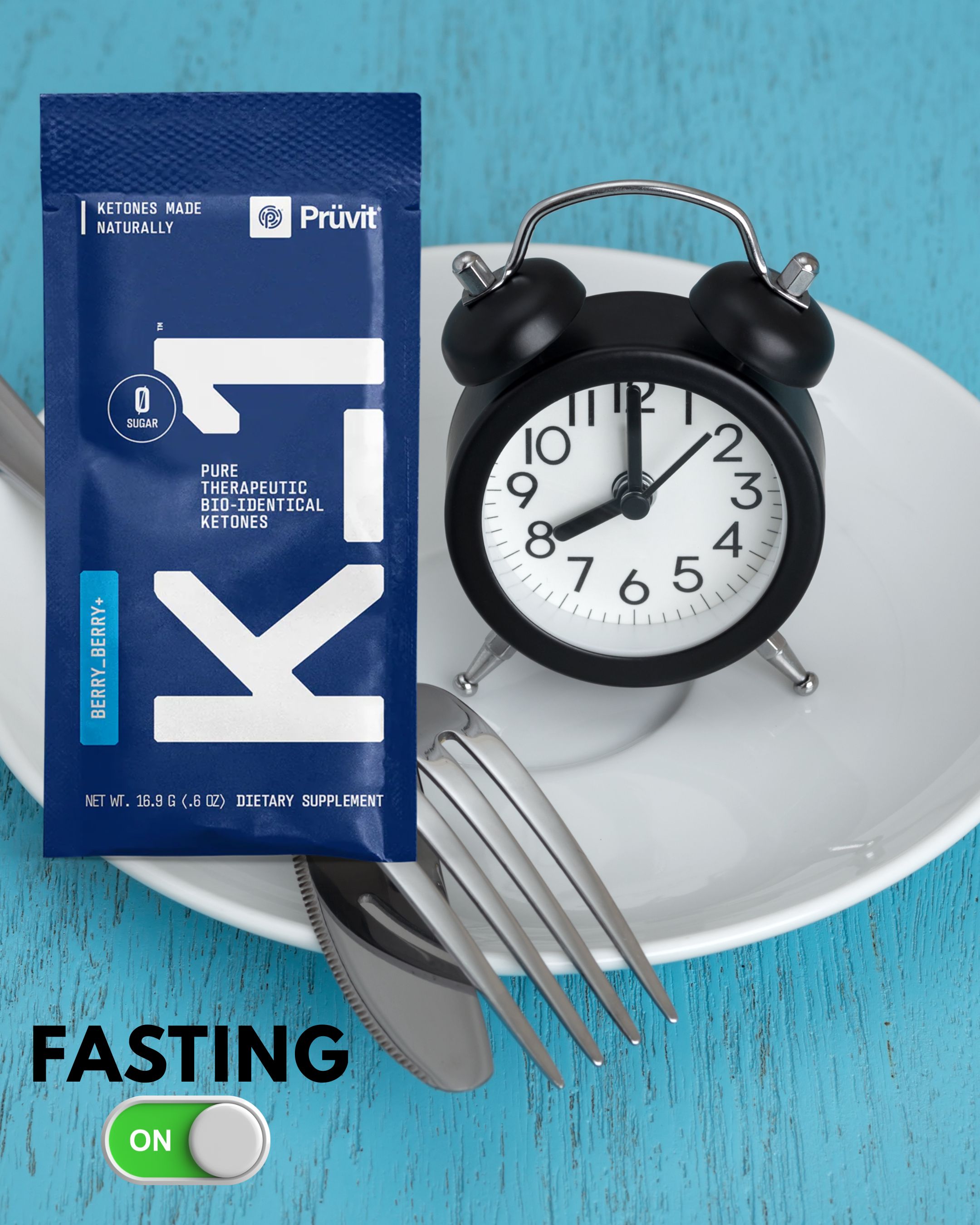

I ran K1 ketones with 15 patients at FastingON for...
Read MoreExogenous Ketonesduring fasting
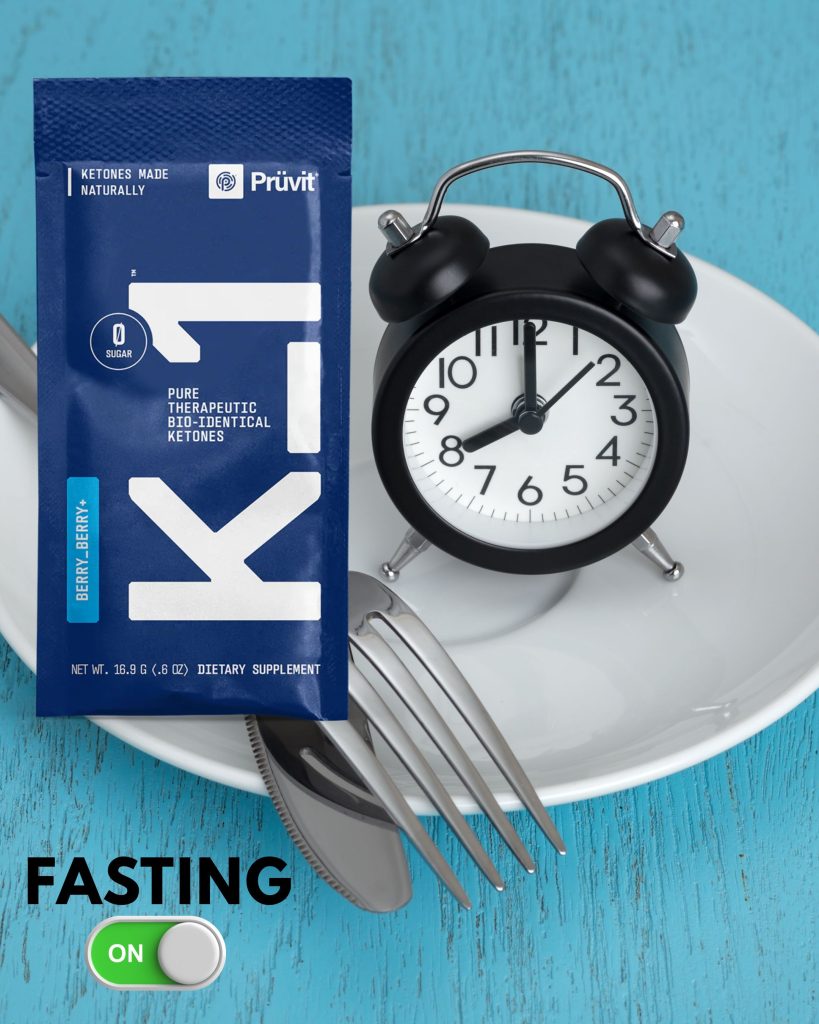
Few questions in the fasting space generate as much debate as this one. Do ketones break a fast?
The answer depends on how fasting is defined, and more importantly, on the metabolic objective.
Fasting is not a single biological state. It is a spectrum of physiological processes.
What Does It Mean to “Break” a Fast?
Traditionally, breaking a fast meant consuming calories. But modern metabolic science looks beyond caloric intake.
Fasting influences:
insulin levels
fuel utilization
cellular signaling pathways
A substance that alters these pathways may interrupt fasting physiology. But not all energy sources behave the same way.
The Central Role of Insulin
One defining feature of the fasted state is reduced insulin. Insulin signals nutrient abundance and promotes storage. During fasting, low insulin supports:
lipolysis
fat oxidation
ketone production
Research shows ketone bodies do not elevate insulin compared to carbohydrate intake (Stubbs et al., 2017).
This suggests their presence does not necessarily reverse fasting-related metabolic conditions.
Fuel vs Signaling
Glucose functions as both:
an energy source
a metabolic signal
It activates pathways associated with feeding and growth.
Ketones differ.
They provide energy without strongly activating insulin-dependent storage pathways. In fact, ketone bodies such as beta-hydroxybutyrate also act as signaling molecules linked to stress adaptation and metabolic regulation (Newman & Verdin, 2017).
🔗
https://www.ncbi.nlm.nih.gov/pmc/articles/PMC5357647/
Ketones Are Native to Fasting
During prolonged fasting, the body naturally increases ketone production. These molecules:
supply energy to the brain
support skeletal muscle function
reduce reliance on glucose
In this sense, ketones are not foreign to fasting physiology.They are part of it.
Clinical descriptions of fasting physiology and ketone metabolism are outlined by the National Institutes of Health.
🔗
https://www.ncbi.nlm.nih.gov/books/NBK493179/
Exogenous Ketones and Circulating Fuel
Supplemental ketones can elevate circulating beta-hydroxybutyrate even in the absence of caloric intake (Clarke et al., 2012). This creates a metabolic environment similar to endogenous ketosis. In practical terms, this may:
support cognitive energy
reduce perceived fatigue
stabilize fuel availability
without necessarily shifting the body back toward glucose dependence.
Does Energy Intake Equal Feeding?
Some argue that any caloric input ends a fast.
Yet metabolically, the impact of a substance depends on how it affects:
insulin
nutrient signaling
fuel utilization
Ketones provide energy and do not mimic the hormonal response of carbohydrate intake.
This distinction is central to the discussion.
Context Defines the Answer
If fasting is viewed purely as caloric abstinence: The presence of energy may be considered interruptive. (On FastingOn we don’t agree with this statement)
If fasting is viewed as a metabolic state defined by:
low insulin
fat oxidation
ketone availability
then supporting ketone presence may align with fasting physiology.
FastingON Functional Perspective:
Fasting is not defined by emptiness.
It is defined by metabolic direction.
Ketones are naturally produced during fasting.
Providing them externally does not inherently reverse the metabolic shift fasting seeks to achieve.
Evidence-Based Answers: Do Ketones Break a Fast?
Scientific interpretation depends on the metabolic outcome being evaluated.
Here are seven key physiological insights.
1. Ketones Do Not Significantly Elevate Insulin
Low insulin is a defining feature of fasting. Studies indicate ketones have minimal impact on insulin compared to carbohydrate intake (Stubbs et al., 2017).
2. Ketones Are Naturally Produced During Fasting
Endogenous ketone production is a hallmark of prolonged fasting. Their presence reflects, rather than opposes, fasting physiology.
3. Ketones Provide Fuel Without Glucose Dependency
Ketones supply energy without requiring elevated blood glucose. This supports the metabolic shift toward fat-derived fuel use.
4. Ketones Do Not Trigger the Same Feeding Signals
Unlike glucose, ketones do not strongly activate nutrient storage pathways. This suggests they do not replicate the hormonal state of feeding.
5. Ketones Support Brain Energy During Fasting
Ketones provide an efficient substrate for the brain, particularly during periods of reduced glucose availability (Cunnane et al., 2016).
6. Supplemental Ketones Elevate Circulating Levels
Exogenous ketones can raise blood beta-hydroxybutyrate even without caloric intake (Clarke et al., 2012). This may support the metabolic environment of fasting.
7. The Definition of “Breaking” a Fast Is Contextual
If fasting is defined as total caloric abstinence: Ketones may be viewed as interruptive.
If fasting is defined as a metabolic state characterized by:
low insulin
fat oxidation
ketone availability
then their presence may align with fasting physiology.

Pruvit K1 Ketones (C5 Formula) – Available Now | Dr. Monica Mogne
K1 ketones by Pruvit are now available. They combine BHB...
Read More
Why Intermittent Fasting Is Hard: The Real Biological Reasons (And the Fixes That Actually Work)
Intermittent fasting is hard for specific biological reasons, not because...
Read More
How to Start Intermittent Fasting Over 40: The Clinical Guide That Actually Works
Starting intermittent fasting over 40 requires a different approach than...
Read MoreReferences
- Stubbs BJ et al. (2017). On the metabolism of exogenous ketones. Frontiers in Physiology.
- Clarke K et al. (2012). Ketone bodies as a fuel. Frontiers in Physiology.
- Newman JC & Verdin E. (2017). β-hydroxybutyrate signaling. Science.
- Cunnane SC et al. (2016). Brain energy metabolism. Neurobiology of Aging.