
16:8 Intermittent Fasting: The Most Popular Protocol Explained
What Is 16:8 Intermittent Fasting?
The 16:8 intermittent fasting protocol is the most popular and sustainable approach to time-restricted eating. It involves fasting for 16 hours and eating all your meals within an 8-hour window each day.
Unlike extreme diets that restrict what you eat, 16:8 fasting focuses on when you eat, making it easier to follow long-term while delivering powerful metabolic benefits including weight loss, improved energy, and enhanced mental clarity.
The beauty of 16:8? It fits seamlessly into your lifestyle. Most people already fast for 8-10 hours overnight while sleeping—16:8 simply extends that window by a few hours.
How Does 16:8 Intermittent Fasting Work?
The Science Behind 16:8
When you fast for 16 hours, your body undergoes several metabolic shifts:
Hours 0-4: Your body uses glucose from your last meal for energy.
Hours 4-8: Glucose stores deplete, and your body begins tapping into glycogen (stored carbohydrates).
Hours 8-12: Glycogen runs low, and fat burning accelerates.
Hours 12-16: Your body enters deeper ketosis, producing ketones for energy. This is when autophagy (cellular repair) increases, inflammation decreases, and fat loss accelerates.
Research shows that 16:8 intermittent fasting improves insulin sensitivity by up to 31%, reduces inflammation, and activates autophagy—your body’s natural cellular cleanup process (Sutton et al., 2018).
Benefits of 16:8 Intermittent Fasting
1. Weight Loss & Fat Burning
16:8 fasting creates a natural calorie deficit while optimizing fat-burning hormones. Studies show participants lose 3-8% of body weight over 8-24 weeks without counting calories (Tinsley & La Bounty, 2015).
2. Improved Metabolic Health
Fasting for 16 hours daily improves insulin sensitivity, lowers blood sugar levels, and reduces the risk of type 2 diabetes (Sutton et al., 2018).
3. Enhanced Mental Clarity
During fasting, your brain produces more BDNF (brain-derived neurotrophic factor), improving focus, memory, and cognitive performance (Mattson et al., 2018).
4. Increased Energy
Once fat-adapted, your body efficiently burns fat for fuel, providing steady energy without the blood sugar crashes associated with frequent eating.
5. Cellular Repair & Longevity
Fasting activates autophagy, helping your body remove damaged cells and regenerate new ones—potentially slowing aging and reducing disease risk (Madeo et al., 2019).
6. Simplicity & Sustainability
Unlike complex diets, 16:8 requires no calorie counting, meal prep, or special foods. You simply adjust your eating window.
16:8 Intermittent Fasting Schedule: How to Start
Popular 16:8 Schedules
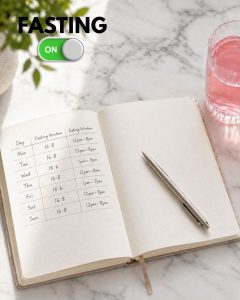
Option 1: Skip Breakfast (Most Popular)
Eating Window: 12:00 PM – 8:00 PM
Fasting Window: 8:00 PM – 12:00 PM (next day)
Best For: People who aren’t hungry in the morning
Option 2: Skip Dinner
Eating Window: 8:00 AM – 4:00 PM
Fasting Window: 4:00 PM – 8:00 AM (next day)
Best For: Early risers and those who prefer eating breakfast
Option 3: Late Start
Eating Window: 2:00 PM – 10:00 PM
Fasting Window: 10:00 PM – 2:00 PM (next day)
Best For: Night owls and late workers
Choose the schedule that fits your lifestyle. The best fasting protocol is the one you can stick to consistently.
What Can You Eat During 16:8 Intermittent Fasting?
During the Fasting Window (16 hours)
Allowed:
Water (unlimited)
Black coffee (no sugar, no cream)
Plain tea (green, black, herbal)
Sparkling water
Electrolytes (sodium, potassium, magnesium)
- Exogenous ketones
Avoid:
Any food or calories
Sweeteners
Milk, cream, or butter in coffee
Diet sodas (artificial sweeteners may break your fast)
During the Eating Window (8 hours)
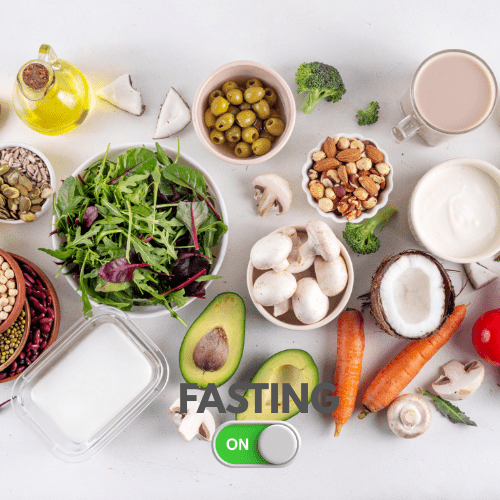
Focus on nutrient-dense, whole foods:
Proteins: Eggs, chicken, fish, beef, turkey, Healthy Fats: Avocado, olive oil, nuts, seeds, fatty fish
Vegetables:Leafy greens, broccoli, cauliflower, peppers, zucchini Complex Carbs: Sweet potatoes, quinoa, brown rice, oats Fruits:Berries, apples, oranges (in moderation)
Avoid: Processed foods, refined sugars, excessive carbohydrates, and trans fats.
Sample 16:8 Intermittent Fasting Meal Plan
Day 1: 12:00 PM – 8:00 PM Eating Window
12:00 PM – First Meal (Break-Fast):
3 scrambled eggs with spinach and avocado
Black coffee or green tea
3:00 PM – Snack (Optional):
Handful of almonds
Strawberries
6:00 PM – Dinner:
Grilled salmon with roasted vegetables
Quinoa or cauliflower rice
Side salad with olive oil dressing
7:30 PM – Light Snack (Optional):
Greek yogurt with berries
Herbal tea
8:00 PM – Fasting Begins
How to Make 16:8 Fasting Easier
1. Stay Hydrated
Drink at least 2-3 liters of water daily. Add a pinch of sea salt for electrolytes and mitoplex.
2. Use Exogenous Ketones
Exogenous ketones like NAT20 suppress hunger hormones (ghrelin), making fasting significantly easier while providing instant energy (Stubbs et al., 2018).
3. Start Gradually
If 16 hours feels too long, start with 12:12 or 14:10 and gradually extend your fasting window.
4. Keep Busy During Fasting
Distraction is your best friend. Work, exercise, or engage in hobbies during your fasting window.
5. Break Your Fast Wisely
Start with a balanced meal containing protein, healthy fats, and vegetables. Avoid breaking your fast with sugar or refined carbs.
Common Mistakes to Avoid
1. Overeating During Your Eating Window
16:8 isn’t a license to binge. Focus on nutrient-dense meals and listen to your hunger cues.
2. Not Drinking Enough Water
Dehydration can cause headaches, fatigue, and false hunger signals.
3. Eating Too Close to Bedtime
Finish your last meal 2-3 hours before bed for better sleep and digestion.
4. Inconsistent Fasting Schedule
Consistency is key. Stick to the same eating window daily for best results.
5. Ignoring Nutrient Quality
Eating junk food during your eating window will sabotage your results. Prioritize whole, unprocessed foods.
Who Should Avoid 16:8 Intermittent Fasting?
16:8 fasting is safe for most healthy adults, but it’s not recommended for:
Pregnant or breastfeeding women
Children
People with a history of eating disorders
Individuals with type 1 diabetes (without medical supervision)
Those taking medications that require food, must adapt.
Always consult your healthcare provider before starting any fasting protocol.
16:8 | Intermittent Fasting Results: What to Expect
Week 1-2: Adaptation Phase
Mild hunger during fasting window
Increased energy after meals
Possible headaches (usually due to dehydration)
Week 3-4: Fat Adaptation
Reduced hunger during fasting
Steady energy levels throughout the day
Noticeable weight loss (2-4 lbs)
Month 2-3: Metabolic Transformation
Significant fat loss (5-10 lbs or more)
Improved mental clarity and focus
Better sleep quality
Reduced inflammation and bloating
Real Results: Studies show 16:8 intermittent fasting leads to 3-8% body weight loss over 8-24 weeks, with improvements in insulin sensitivity, cholesterol, and blood pressure (Tinsley & La Bounty, 2015).
16:8 vs Other Fasting Protocols
Protocol | Fasting Hours | Eating Window | Difficulty | Best For |
|---|---|---|---|---|
16:8 | 16 | 8 | Easy | Beginners, sustainable weight loss |
18:6 | 18 | 6 | Moderate | Faster results, experienced fasters |
20:4 | 20 | 4 | Hard | Advanced, rapid fat loss |
5:2 | 2 days/week | 5 days normal | Moderate | Flexibility, social schedules |
OMAD | 23 | 1 | Very Hard | Extreme discipline, quick results |
16:8 is the sweet spot: Easy enough for beginners, effective enough for results, sustainable for life.
Frequently Asked Questions
Can I exercise during 16:8 fasting?
Yes! Many people train fasted for enhanced fat burning. For intense workouts, consider exogenous ketones before and breaking your fast with a protein-rich meal afterward.
Will I lose muscle on 16:8 fasting?
No. Studies show 16:8 preserves muscle mass while burning fat, especially when combined with resistance training and adequate protein intake (Tinsley et al., 2015).
Can I drink coffee during the fasting window?
Yes, black coffee is allowed and can even enhance fat burning. Avoid adding sugar, cream, or milk.
How long does it take to see results?
Most people notice increased energy within 1-2 weeks and visible weight loss within 3-4 weeks.
Can I do 16:8 fasting every day?
Yes, 16:8 is designed for daily use and is safe for long-term practice.
Ready to Start 16:8 Intermittent Fasting?
The 16:8 protocol is the easiest, most sustainable way to unlock the benefits of intermittent fasting—without extreme hunger or complicated rules.
Start today:
Choose your 8-hour eating window
Stay hydrated during fasting
Eat nutrient-dense meals
Be consistent for 30 days
Want to make fasting even easier? Combine 16:8 with exogenous ketones to suppress hunger, boost energy, and accelerate fat loss.
Explore our LOSE IT Protocol for a structured, science-backed fasting program designed to deliver results in just 16 days.


More Scientific References:
Sutton EF, et al. Early time-restricted feeding improves insulin sensitivity, blood pressure, and oxidative stress. Cell Metab. 2018;27(6):1212-1221.
https://www.cell.com/cell-metabolism/fulltext/S1550-4131(18)30253-5
Tinsley GM, La Bounty PM. Effects of intermittent fasting on body composition and clinical health markers in humans. Nutr Rev. 2015;73(10):661-674.
https://academic.oup.com/nutritionreviews/article/73/10/661/1935113
Mattson MP, et al. Intermittent metabolic switching, neuroplasticity and brain health. Nat Rev Neurosci. 2018;19(2):63-80.
https://www.nature.com/articles/nrn.2017.156
Madeo F, et al. Caloric restriction mimetics against age-associated disease. Cell. 2019;186(1):97-110.
https://www.cell.com/cell/fulltext/S0092-8674(18)31503-X
Stubbs BJ, et al. A ketone ester drink lowers human ghrelin and appetite. Obesity. 2018;26(2):269-273.